




search for solutions by category, industries, insights, and people.

Rural Health Transformation

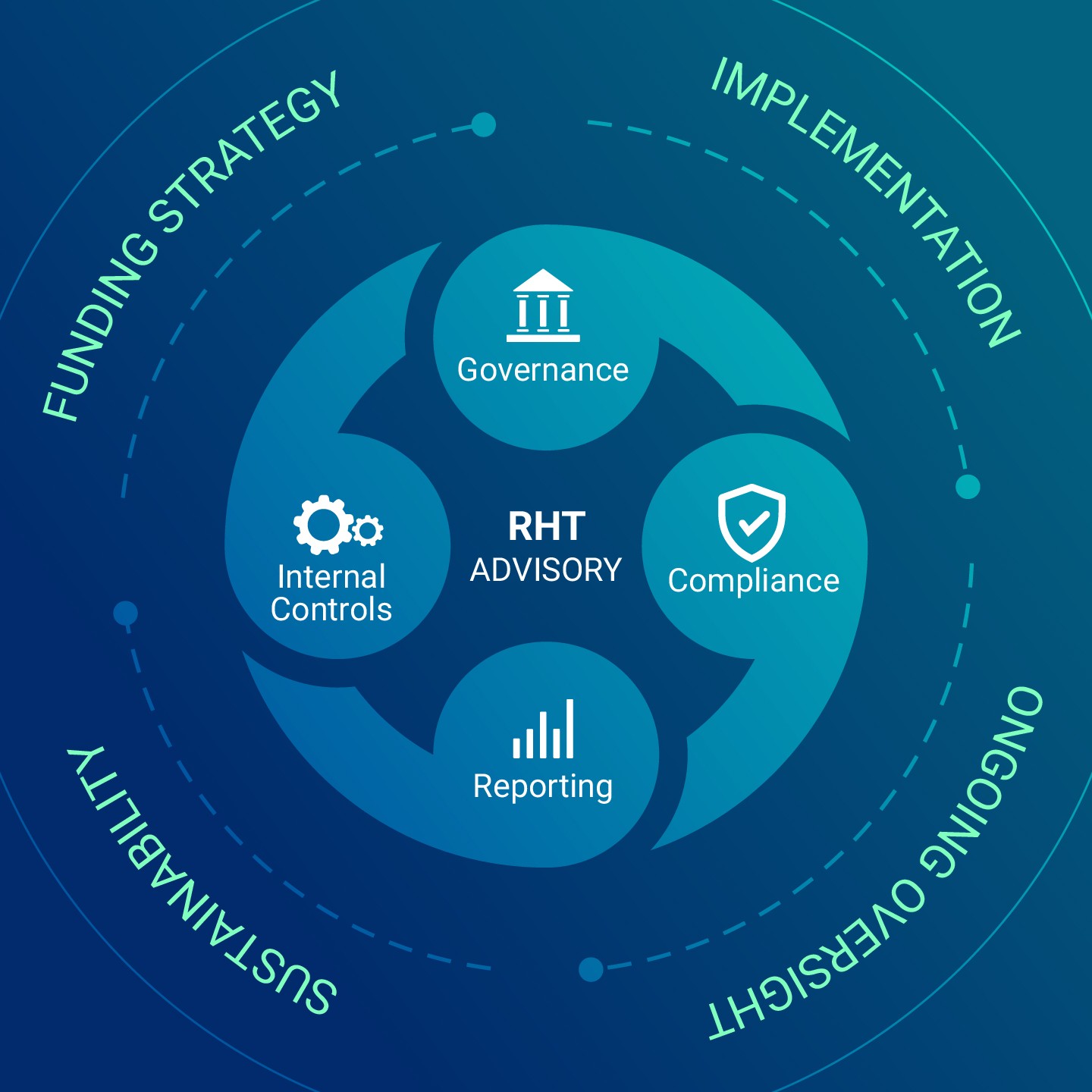
Grant lifecycle support for sustainable outcomes
Securing funding is only the beginning. The greater challenge is turning that investment into measurable improvements for rural communities while meeting program requirements, managing risk, and building initiatives that last beyond the funding period.
Elliott Davis helps healthcare providers, partners, technology companies, vendors, and other participants throughout the Rural Health Transformation Program funding lifecycle, from pursuing state-specific opportunities to implementing funded initiatives, meeting federal requirements, and planning for sustainability.
RHT strategic priorities
Make Rural America Healthy Again
Advance rural health through prevention, innovation, and evidence-based care.
Sustainable Access
Strengthen access to coordinated, efficient, and sustainable rural care.
Workforce Development
Build and retain a skilled rural healthcare workforce.
Innovative Care
Advance flexible care and payment models that improve quality and outcomes.
Tech Innovation
Expand secure technology and digital health capabilities in rural communities.
For additional program details, funding information, and Rural Health Transformation resources, visit the CMS Rural Health Transformation Program page.
Program
Deadlines
The Rural Health Transformation Program provides $50 billion in federal funding to approved states from FY2026 through FY2030, allocated at $10 billion per year.
First-Year Awards (FY2026)
September 30, 2027
Deadline for states to spend first-year awards.
Second-Year Awards (FY2027)
October 31, 2026
Expected announcement of second-year state awards.
Rural Health Transformation Program awards
Select a state to see its award, funding per rural resident, and official program page.
Alaska
Total award
$272,174,856
Award per rural resident
$989.83
Rural population
274,972
Make Your Investment Count
At every stage of a Rural Health Transformation award, Elliott Davis helps you align initiatives with state priorities and put funding to work.
We support strong oversight, measurable progress, ongoing compliance, and long-term sustainability. The result is better protection for your investment, clear evidence of results, and stronger readiness for future funding rounds.
meet our
specialists





Rural Health Transformation
insights






Frequently Asked Questions
Do Federal procurement requirements apply to RHT-funded purchases?
Generally, yes when an organization receives RHT funding as a recipient or subrecipient of federal financial assistance. Applicable requirements may include 2 CFR Part 200, the organization’s written procurement policy, state procurement requirements, and award-specific provisions. Identify the most restrictive applicable requirement before beginning the procurement.
Can an organization use its existing procurement policy for RHT purchases?
Possibly, but the policy should first be evaluated against federal procurement standards, state requirements, and the award terms. A commercial purchasing process may not address federal requirements such as conflicts of interest, competition, procurement documentation, cost or price analysis, vendor eligibility, required contract provisions, and noncompetitive procurement. A practical approach is to use the existing policy as the operational foundation and add a federal-award overlay.
Does every RHT purchase require three quotes?
No. Federal rules do not impose a universal three-quote rule for every purchase. The required method depends on the applicable threshold, purchase type and value, organizational policy, state law, and award terms. Some states or awards may expressly require three quotes or another defined level of competition. Document the applicable method before requesting quotes.
When is sole-source procurement permitted?
Noncompetitive procurement is limited and should be treated as an exception. A strong justification addresses operational necessity, compatibility or interoperability, the absence of reasonable alternatives, consequences of changing vendors, and price reasonableness. Obtain written prior approval when required before issuing a purchase order or executing a contract.
Is naming a vendor in the approved RHT application the same as procurement approval?
Not necessarily. Inclusion of a vendor or cost in an application or approved budget does not automatically establish adequate competition, price reasonableness, or cost allowability. Determine whether a separate procurement, state concurrence, or prior written approval is required before contracting.
Does receiving an RHT award automatically require a Single Audit?
No. For an organization subject to 2 CFR Part 200, Subpart F, the requirement is generally based on federal awards expended during the organization’s fiscal year, not the award amount or cash received. A non-federal entity that expends $1 million or more in federal awards during its fiscal year must obtain a Single Audit or, when permitted, a program-specific audit. Other state, pass-through, or award-specific audit requirements may still apply below that threshold.
Does RHT funding passed through a state count toward the Single Audit threshold?
Yes, when the organization is a subrecipient subject to Subpart F. Federal funding does not lose its federal character because it passes through a state or another organization. Aggregate qualifying federal expenditures across the full federal award portfolio.
Is the threshold measured using the award amount, cash received, or expenditures?
The threshold is measured using federal awards expended during the organization’s fiscal year. A multiyear award larger than $1 million may not trigger a Single Audit in the first year if expenditures remain below the threshold. Several smaller awards may collectively trigger the requirement.
Can a for-profit company receive Rural Health Transformation funding?
Yes. A for-profit company may receive Rural Health Transformation Program funding, depending on the state’s eligibility requirements. Companies often participate as subrecipients or contractors to eligible recipients, providing healthcare services, technology, data analytics, workforce support, wellness programs, equipment, or other specialized capabilities.
Do I need to be a healthcare company or located in a rural area to participate?
No. Technology vendors, wellness and nutrition businesses, data firms, training providers, staffing companies, consultants, and other service organizations may participate by partnering with a qualified recipient. A company generally does not need a rural address or clinical license, but it must have a defined role in an approved project.
What compliance obligations come with RHT funding?
RHT compliance obligations depend on the participant’s role, award structure, state requirements, and agreement terms. Subrecipients are generally subject to federal cost principles, financial management standards, monitoring, reporting, and recordkeeping requirements. Contractors primarily follow their contract terms, required federal clauses, and applicable procurement requirements.
How can a prevention program continue after RHT funding ends?
A prevention program can continue after RHT funding ends by identifying a long-term revenue source before the grant expires. Potential pathways include value-based contracts and commercial agreements with health systems, employers, or payers. The program should identify who will pay for it, measure the results that matter to that customer, and build data systems and partnerships that can continue without grant support.
contact our team.