

DO NOT PUBLISH




Table of Contents
Share with network
Related Insights
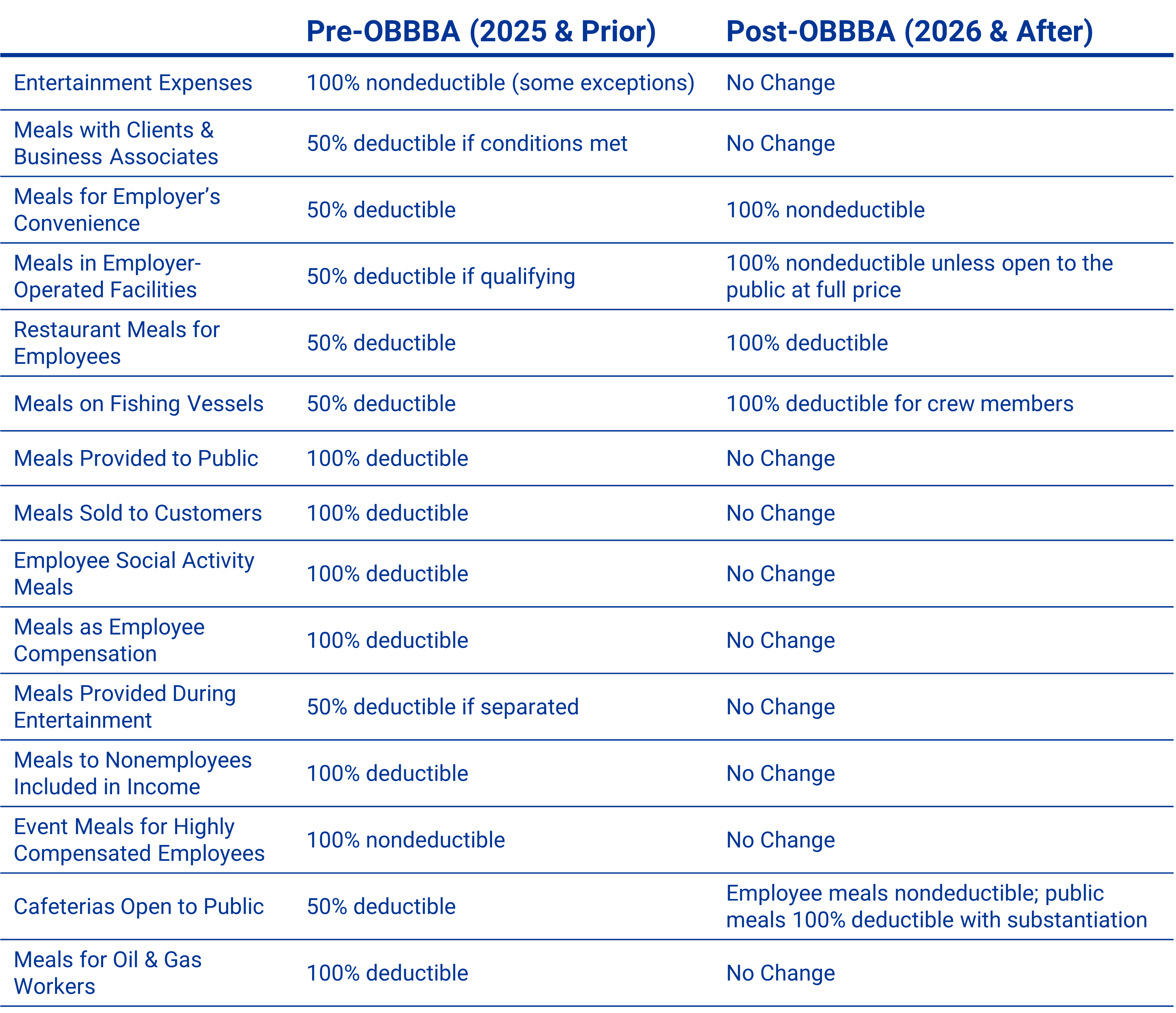
The One Big Beautiful Bill Act (OBBBA) brings new rules for meals and entertainment deductions beginning in tax years after December 31, 2025. While the categories haven’t changed much, the deductibility rules have. For business owners, this means far fewer employer provided meals will qualify. Only a limited set of specific situations will still allow a deduction under the new law.
Below is a table summarizing the changes:
Since the OBBBA significantly limits the deductibility of employer-provided meals, most businesses will need to make some operational and accounting adjustments. As you prepare for the 2026 tax year, consider the following:
The Elliott Davis team helps business owners adapt to the new tax requirements and the strategic decisions that follow. We can assist with policy updates, recordkeeping, and planning so you’re well prepared for the 2026 tax year. Contact us to discuss how these changes may affect your business and what steps to take next.
The information provided in this communication is of a general nature and should not be considered professional advice. You should not act upon the information provided without obtaining specific professional advice. The information above is subject to change.
the
authors
related
insights

Microsoft® Power BI™ best practices: Data modeling and sources
Struggling with data modeling in Power BI? Our certified analysts share eight best practices to optimize data sources, improve performance, and build a data-driven culture. Learn how to streamline ETL processes, enhance query efficiency, and maximize insights with Power BI.

Inflation Reduction Act adds two new ways to monetize clean energy credits
Learn how the Inflation Reduction Act of 2022 expands clean energy tax credits with IRC § 6417 and § 6418. Discover how direct pay and credit transfers benefit tax-exempt entities, clean energy developers, and state institutions while navigating eligibility and regulatory updates.

Assisting in the acquisition of 10 veterinary practices
Discover how Elliott Davis's financial due diligence helped a national veterinary service provider assess a potential transaction, uncover risks, and validate financial forecasts. Learn how in-depth earnings analysis, tax evaluation, and IT diligence enabled informed decision-making and negotiation.