



DO NOT PUBLISH




Table of Contents
Share with network
Related Insights
The One Big Beautiful Bill Act (OBBBA) brings new rules for meals and entertainment deductions beginning in tax years after December 31, 2025. While the categories haven’t changed much, the deductibility rules have. For business owners, this means far fewer employer provided meals will qualify. Only a limited set of specific situations will still allow a deduction under the new law.
Below is a table summarizing the changes:
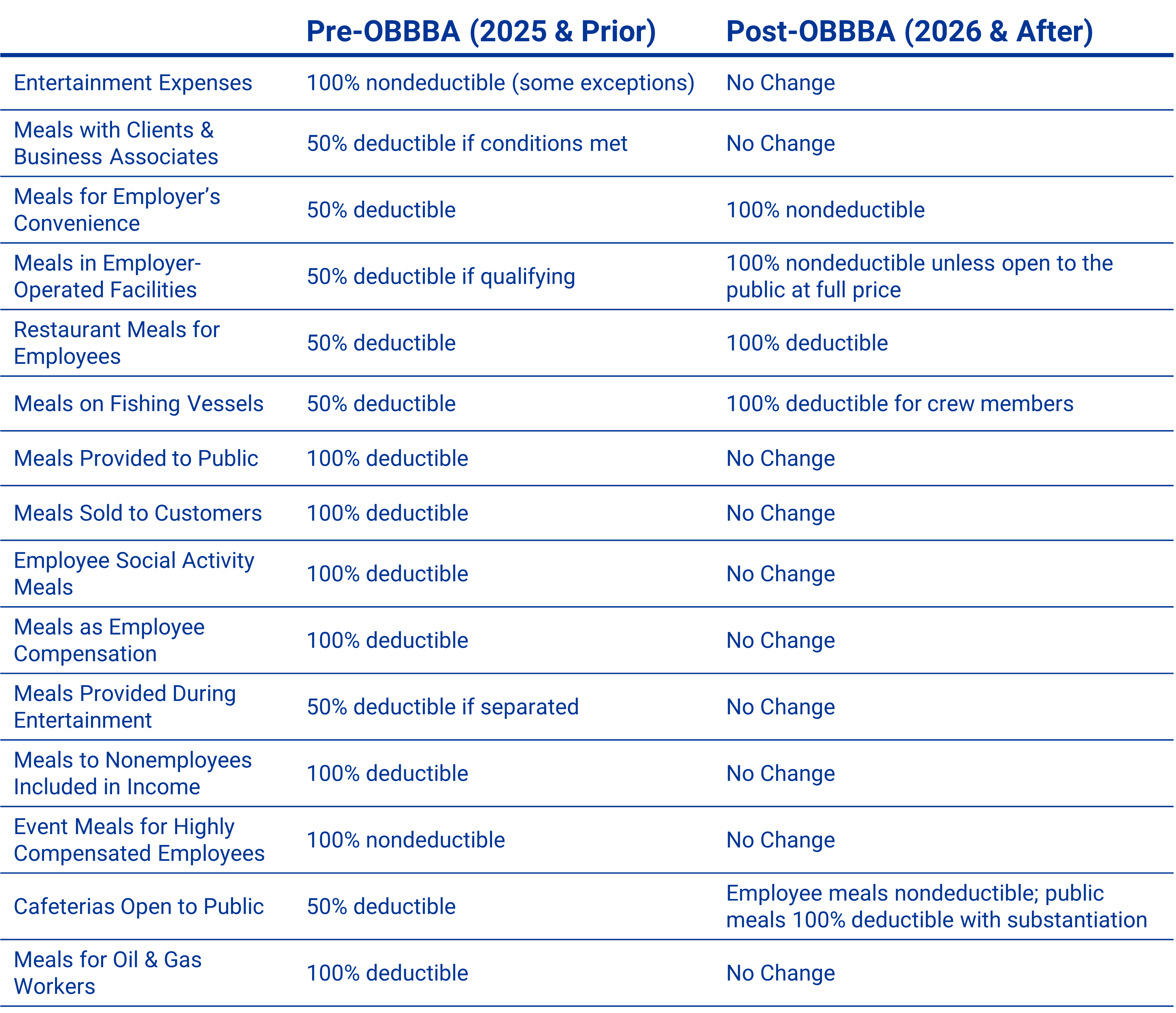
Since the OBBBA significantly limits the deductibility of employer-provided meals, most businesses will need to make some operational and accounting adjustments. As you prepare for the 2026 tax year, consider the following:
The Elliott Davis team helps business owners adapt to the new tax requirements and the strategic decisions that follow. We can assist with policy updates, recordkeeping, and planning so you’re well prepared for the 2026 tax year. Contact us to discuss how these changes may affect your business and what steps to take next.
The information provided in this communication is of a general nature and should not be considered professional advice. You should not act upon the information provided without obtaining specific professional advice. The information above is subject to change.
the
authors
related
insights


Navigating the SEC's latest cybersecurity disclosure rules: What you need to know
The SEC’s new cybersecurity disclosure rules now require public companies to report material cybersecurity incidents within four business days and provide detailed risk management disclosures in annual reports. Organizations must assess the materiality of cyber threats, outline board oversight, and describe management’s role in mitigating risks to ensure transparency for investors.

Inventory held by third party marketplace facilities and its impact on nexus
How Wayfair and marketplace facilitator law affect sales tax nexus, marketplace inventory exposure from third-party warehouses, and income tax filing obligations for remote sellers. Learn how states are enforcing rules for remote sellers.

Strengthening Cybersecurity: Part 1 - Tackling clear text password storage
Cyber threats are constantly evolving, and one often-overlooked vulnerability is clear text password storage. This article explores the risks of storing passwords in plain text, how attackers exploit this weakness, and practical solutions—including password managers, user awareness, and professional cybersecurity assistance—to strengthen your security posture.