


DO NOT PUBLISH




Table of Contents
Share with network
Related Insights
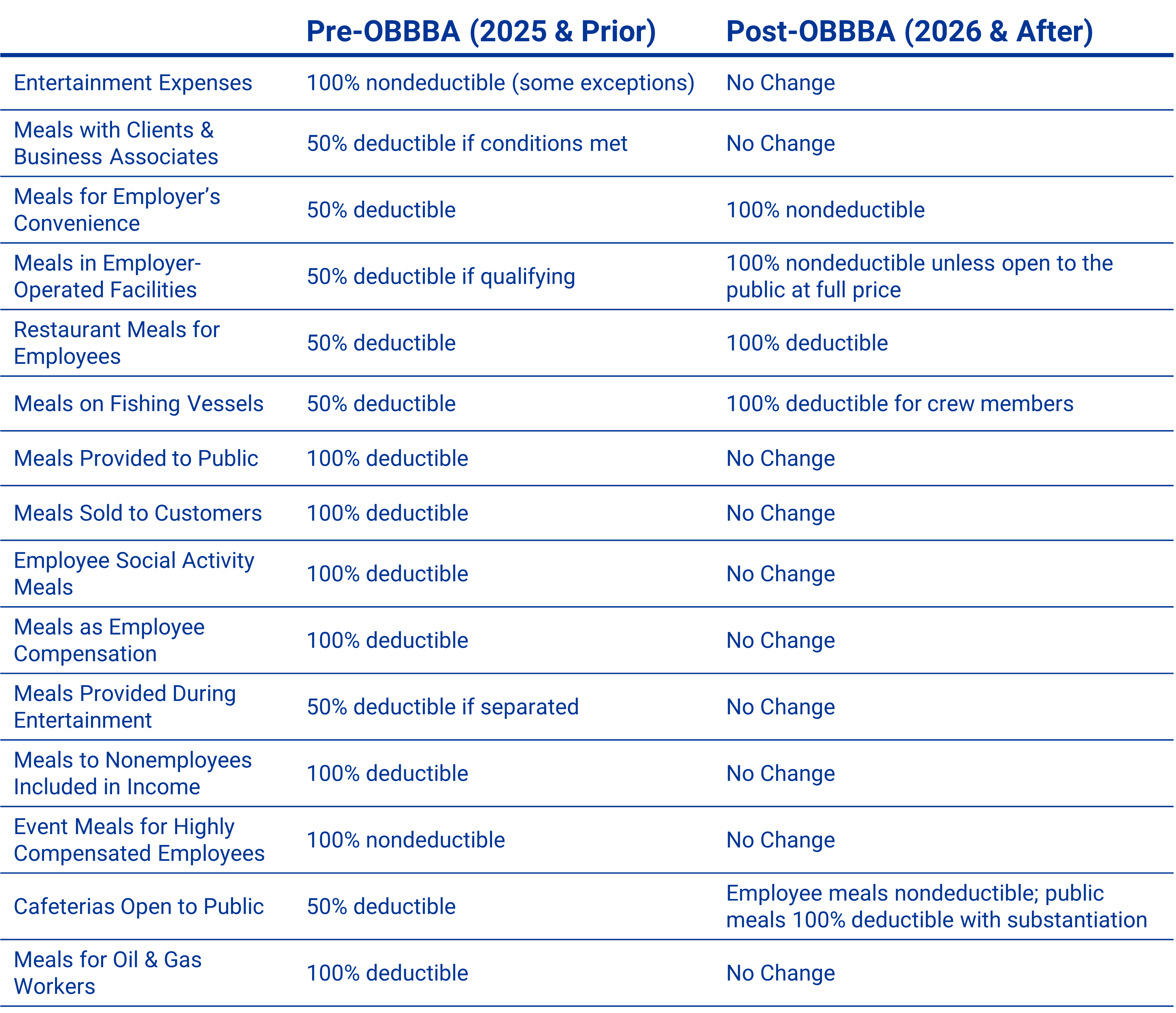
The One Big Beautiful Bill Act (OBBBA) brings new rules for meals and entertainment deductions beginning in tax years after December 31, 2025. While the categories haven’t changed much, the deductibility rules have. For business owners, this means far fewer employer provided meals will qualify. Only a limited set of specific situations will still allow a deduction under the new law.
Below is a table summarizing the changes:
Since the OBBBA significantly limits the deductibility of employer-provided meals, most businesses will need to make some operational and accounting adjustments. As you prepare for the 2026 tax year, consider the following:
The Elliott Davis team helps business owners adapt to the new tax requirements and the strategic decisions that follow. We can assist with policy updates, recordkeeping, and planning so you’re well prepared for the 2026 tax year. Contact us to discuss how these changes may affect your business and what steps to take next.
The information provided in this communication is of a general nature and should not be considered professional advice. You should not act upon the information provided without obtaining specific professional advice. The information above is subject to change.
the
authors
related
insights


The importance of SOC 1 reports in financial services
Strengthen trust and compliance in financial services with a SOC 1 report, demonstrating robust internal controls and regulatory adherence. Learn how SOC 1 enhances credibility, mitigates risks, and sets your institution apart in a competitive market.

Overcoming frustration in inventory management: Key strategies for success
Effective inventory management is essential for business success, helping to balance stock levels, reduce waste, and improve customer satisfaction. By leveraging automation, demand forecasting, centralized data, and a strong supply chain, businesses can streamline operations and eliminate common inventory frustrations.

South Carolina's durable medical equipment sales tax exemption found unconstitutional
The South Carolina Supreme Court has ruled the state's sales tax exemption for Durable Medical Equipment (DME) unconstitutional, effective June 26, 2024. Entities selling DME in South Carolina must now collect and remit sales tax, while out-of-state businesses may be eligible for refunds on past sales.

Test once approach: Streamlining compliance for service organizations
Consolidating SOC, HITRUST, and PCI engagements with a single accounting firm can reduce costs, improve efficiency, and minimize compliance fatigue. Learn how Elliott Davis can streamline your testing process while enhancing compliance management.

ESG and sustainability in the manufacturing sector: What you need to know
The manufacturing industry is a major contributor to global emissions and energy consumption, making sustainability a key priority. This article explores ESG factors shaping the sector, highlighting risks, opportunities, and strategic actions manufacturers can take to drive sustainable innovation and long-term resilience.