Every industry has its own nuances. We take that into consideration and approach business solutions with the specific lens required of your field. Our teams are comprised of talent with relevant experience and we’re prepared to meet every challenge.
What do you actually do with AI? In the final episode of this three-part series, Dr. Drew Brannon and Michael Wolinsky move from reflection to action, exploring how individuals and organizations can begin using AI effectively.
CMS Rural Health Transformation Program: Early lessons about compliance, capacity, and implementation
Early Rural Health Transformation Program (RHTP) recipients are learning that compliance, capacity, and implementation demands begin the moment an award is won.
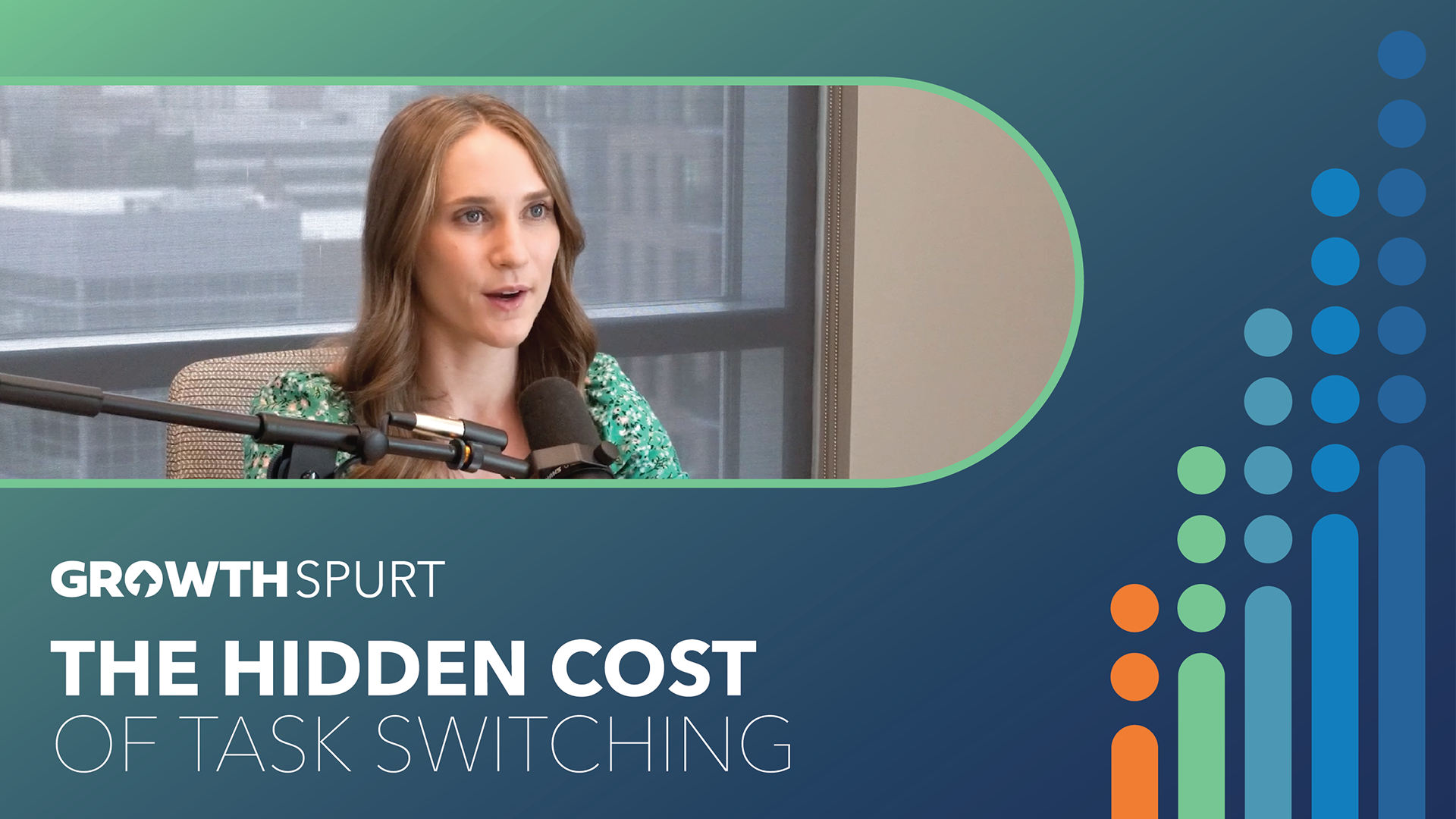
The Hidden Cost of Task Switching
Ever finish a meeting and struggle to focus on the task in front of you?
What a growth mindset in construction can do: Building future leaders and stronger companies
Learn how a growth mindset helps construction companies develop future leaders, strengthen culture, improve retention, and increase long-term business value.
AI Strategy Starts with People (Part 2)
AI adoption isn't as simple as choosing a tool and training your team to use it.
Every industry has its own nuances. We take that into consideration and approach business solutions with the specific lens required of your field. Our teams are comprised of talent with relevant experience and we’re prepared to meet every challenge.
What do you actually do with AI? In the final episode of this three-part series, Dr. Drew Brannon and Michael Wolinsky move from reflection to action, exploring how individuals and organizations can begin using AI effectively.
CMS Rural Health Transformation Program: Early lessons about compliance, capacity, and implementation
Early Rural Health Transformation Program (RHTP) recipients are learning that compliance, capacity, and implementation demands begin the moment an award is won.
The Hidden Cost of Task Switching
Ever finish a meeting and struggle to focus on the task in front of you?
What a growth mindset in construction can do: Building future leaders and stronger companies
Learn how a growth mindset helps construction companies develop future leaders, strengthen culture, improve retention, and increase long-term business value.
CMS Rural Health Transformation Program: Early lessons about compliance, capacity, and implementation
Lorem ipsum dolor set
What a growth mindset in construction can do: Building future leaders and stronger companies
Lorem ipsum dolor set
Most companies don't need a better budget. They need a planning system
Lorem ipsum dolor set
How a healthcare organization scaled IT leadership through Office of the CIO services
Lorem ipsum dolor set
Understanding the Cash vs. Tax Carry Mismatch in Private Equity Funds
Lorem ipsum dolor set
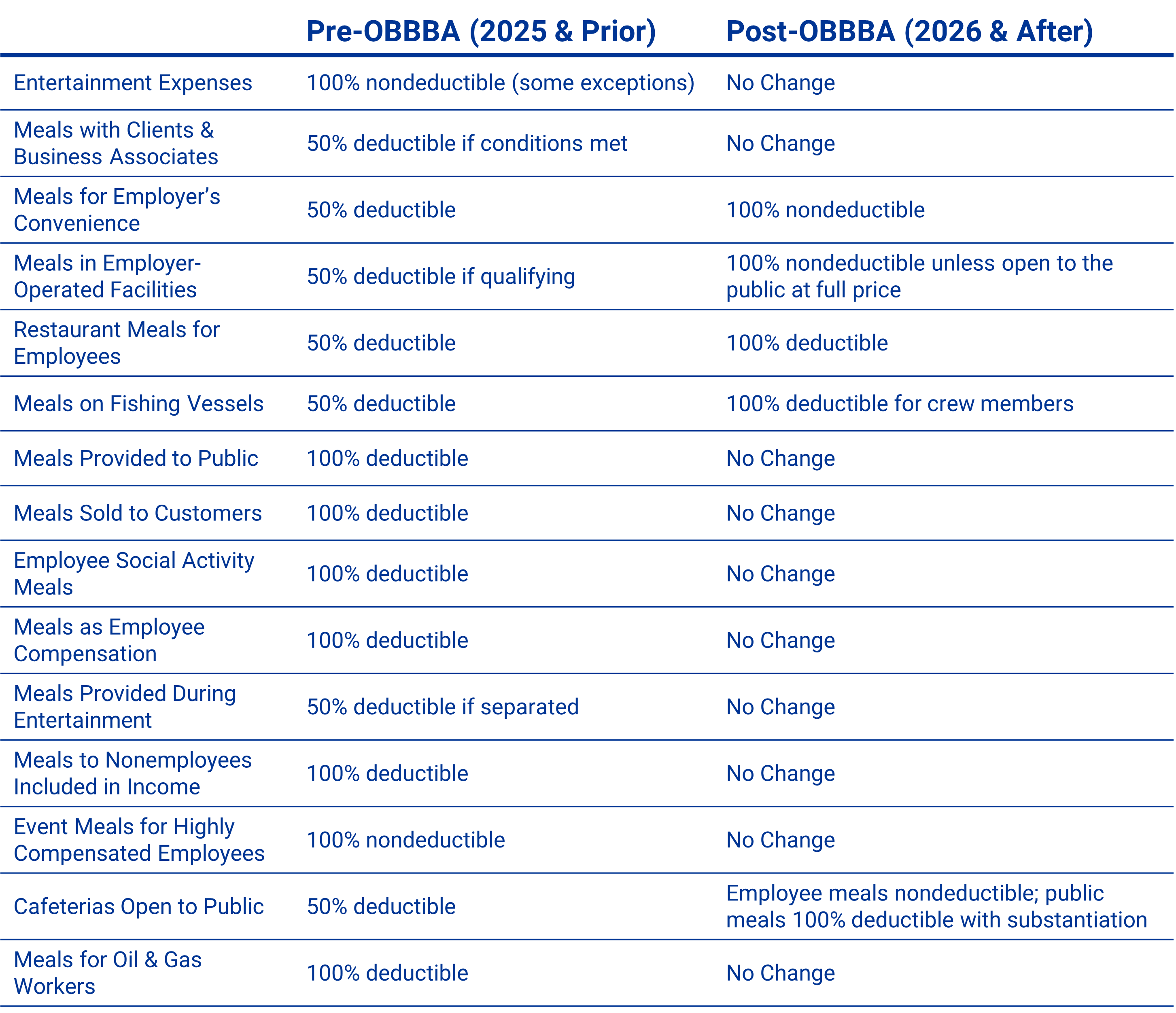
The One Big Beautiful Bill Act (OBBBA) brings new rules for meals and entertainment deductions beginning in tax years after December 31, 2025. While the categories haven’t changed much, the deductibility rules have. For business owners, this means far fewer employer provided meals will qualify. Only a limited set of specific situations will still allow a deduction under the new law.
At a Glance
Entertainment costs stay nondeductible (with only a few narrow exceptions).
Business meals remain 50% deductible, but you still need proper documentation and a clear business purpose.
Employer-provided meals become mostly nondeductible, including snacks, coffee, overtime meals, and meals served in on-site cafeterias. Exceptions include:
Meals provided by restaurants to their employees
Meals on fishing vessels
Meals sold to the public at full price in employer-operated cafeterias
Below is a table summarizing the changes:
Action Steps for Employers
Since the OBBBA significantly limits the deductibility of employer-provided meals, most businesses will need to make some operational and accounting adjustments. As you prepare for the 2026 tax year, consider the following:
Review how your company currently provides meals and snacks. Identify where food is being offered (e.g., break rooms, cafeterias, meetings, overtime support) and determine which items will no longer be deductible.
Update internal policies and communication. Employees may need clarity on what qualifies as a business meal going forward. Simple updates to handbooks, expense policies, or manager guidance can prevent confusion.
Adjust your accounting and tax processes. You may need new general ledger categories, revised tracking procedures, and updated tax provision and return calculations to reflect the new limitations.
Evaluate operational and financial impact. For companies with cafeterias or regular meal offerings, it may be worth assessing costs, pricing, and whether changes to operations make sense under the new rules.
We Can Help
The Elliott Davis team helps business owners adapt to the new tax requirements and the strategic decisions that follow. We can assist with policy updates, recordkeeping, and planning so you’re well prepared for the 2026 tax year. Contact us to discuss how these changes may affect your business and what steps to take next.
The information provided in this communication is of a general nature and should not be considered professional advice. You should not act upon the information provided without obtaining specific professional advice. The information above is subject to change.

2026 Tax Alert: The impact of California’s sourcing rules on asset managers
Discover how California’s finalized market-based sourcing rules will reshape asset management taxation in 2026. Learn what CFOs and fund managers must do now to prepare for investor-based fee sourcing and expanded compliance obligations.

October 27, 2025
After the deal: A seller’s guide to post-transaction economics
Explore key financial and strategic considerations for business sellers after closing a deal. This guide covers contingent payments, equity rolls, seller notes, leverage, escrow provisions, and employment agreements, offering practical tips to protect your financial outcomes and navigate post-transaction responsibilities with confidence.
October 16, 2025
How a tech company recovered $1.2 million in state tax refunds
Discover how a California-based tech company recovered $1.2 million in state refunds by correcting income apportionment errors. Learn how expert SALT guidance uncovered overlooked savings and helped the business understand their state tax position.

Case Study
October 15, 2025
New, enhanced QSBS tax benefits: What small business owners and investors need to know
Stay informed on how the recent changes to Qualified Small Business Stock (QSBS) under IRC 1202 affect tax strategy, exit planning, and investment structure for founders, investors, and growing companies. Learn how the One Big Beautiful Bill Act expands gain exclusions and raises asset thresholds.
Article
October 14, 2025
Tax Thursday in Three: October 9, 2025
Elliott Davis provides quick updates on 2025 tax news in October
Video
October 9, 2025
Delivering value across every deal stage of the private equity lifecycle
Discover how Elliott Davis helped a nationwide PE firm optimize deal execution, post-close integration, and sell-side readiness across healthcare and academic services.