
%20(1).jpg)

Table of Contents
Share with network
Related Insights
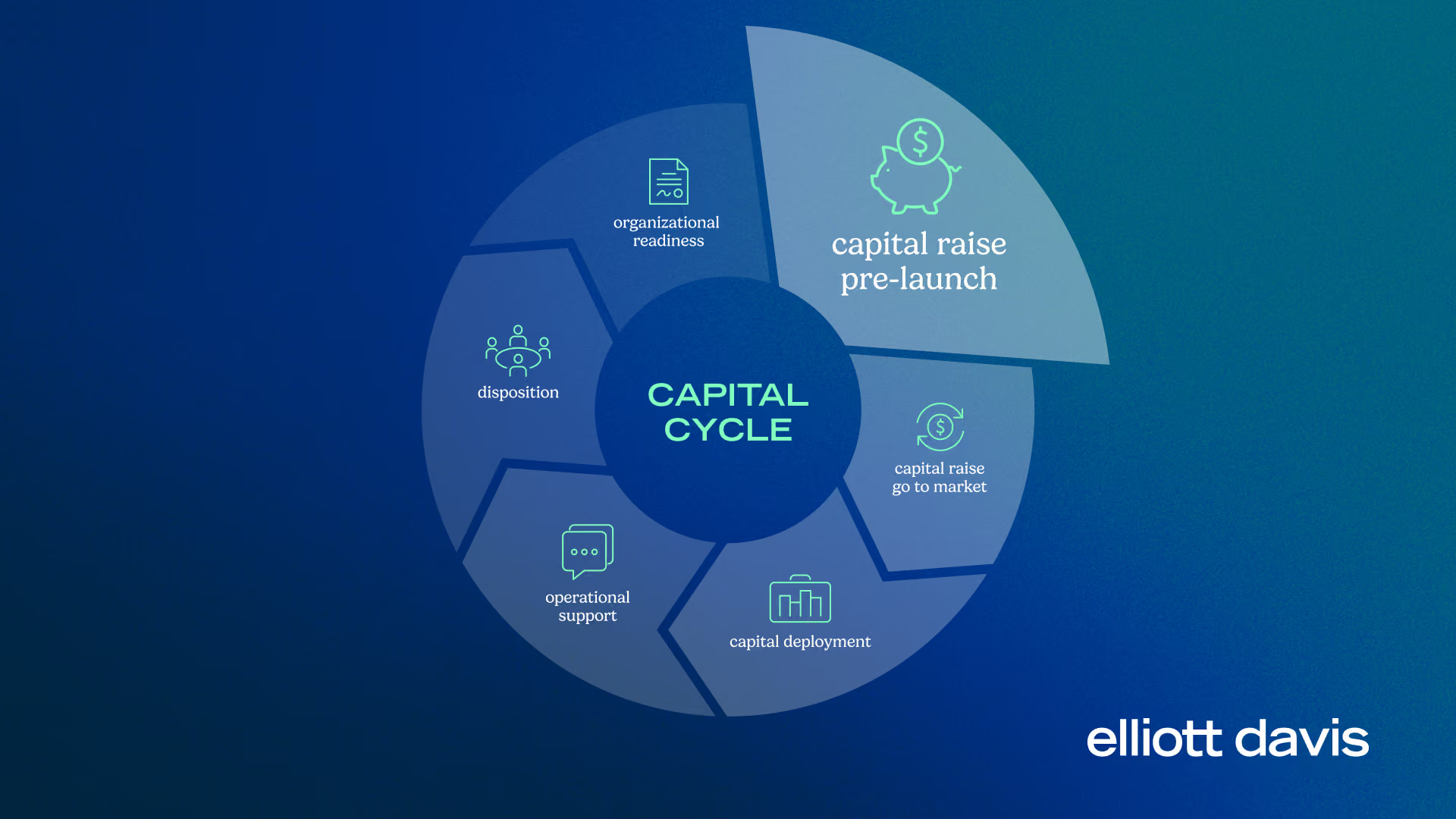
Before raising capital, real estate operators must define the waterfall and fee structure. This early planning determines how profits are shared, how risk is allocated, and how investors evaluate the opportunity. Get it right, and you build a solid foundation for the deal. Get it wrong, and you invite confusion and misalignment, making it harder to attract the investors you need to get the project off the ground.
The waterfall outlines how project profits are divided between the general partner (GP) and the limited partners (LPs). While an ordered sequence of distributions is simple in concept, the structure can get complicated fast.
Key elements include:
Since the waterfall governs how every dollar is shared, operators must establish it before capital is raised and record it in the Private Placement Memorandum (PPM) and operating agreement.
A PPM is a legal document used in private securities offerings to explain the investment, its risks, and the terms investors need to understand before committing capital.
Experienced operators often enter new deals with a well-defined, consistent structure. Newer sponsors, however, are usually more flexible as they try to attract investors, which can create additional challenges. Many sponsors work with an attorney to define waterfall terms, but few test these terms with real numbers to see how they hold up under different conditions.
Without scenario modeling, operators may not see how cash flow timing, return tiers, or fee structures will affect GP economics, investor outcomes, and tax results. Running best‑case, average‑case, and worst‑case scenarios during the drafting stage gives sponsors a clearer view of how the deal will play out before the operating agreement is finalized.
For guidance on after-tax cash flow modeling in real estate deals, read our related article.
Preferred returns give LPs a baseline payout before the GP shares in the profits. A few considerations influence how these terms are set:
Some operators elect to structure preferred returns as accrued and paid at exit, while others choose periodic payouts to appeal to income‑focused investors.
Fee structures vary, but most include:
These fees compensate the GP for sourcing deals, overseeing operations, and managing the investment vehicle.
Sponsors should ground their decisions in a few core considerations:
Waterfall design and fee planning are strategic decisions that influence the entire investment lifecycle. Modeling scenarios early shows how each term affects GP and LP results while there’s still time to adjust.
The Elliott Davis Real Estate team helps align structures with market expectations, so sponsors enter capital raising with a stronger grasp of how the deal will perform.
The information provided in this communication is of a general nature and should not be considered professional advice. You should not act upon the information provided without obtaining specific professional advice. The information above is subject to change.
the
authors
related
insights

The OBBBA changes meal & entertainment deductions starting in the 2026 tax year. Most employer-provided meals will no longer qualify for deductions with a few specific exceptions. Explore next steps for employers.










.jpg)