


Table of Contents
Share with network
Related Insights
For real estate firms preparing to raise capital for larger or more complex projects, the decision to include institutional investors in your capital stack is central to determining the size and structure of your deal.
Institutional capital offers access to deeper pools of equity, but it comes with trade-offs. Investors deploying billions of dollars demand experienced partners and transparent reporting. This means increased oversight, reduced flexibility, and a higher bar for governance. As your firm matures and begins targeting larger opportunities, relationships that began with small deals, formed through networking grounded in successful track records, transition into formal partnerships with sophisticated investors.
So, how do you know if institutional capital is right for your strategy?
High-net-worth individuals often provide more flexible capital, with less frequent reporting requirements and more negotiable terms.
In contrast, institutional investors such as real estate investment trusts (REITs), private equity firms, life insurance companies, pension funds, and financial institutions bring structure, expectations, and conditions that can significantly affect your business model. Each type has different expectations around controls, reporting, and tax treatment. Plus, they generally expect a higher rate of return, which affects your project’s return on investment (ROI) and internal cash flow.
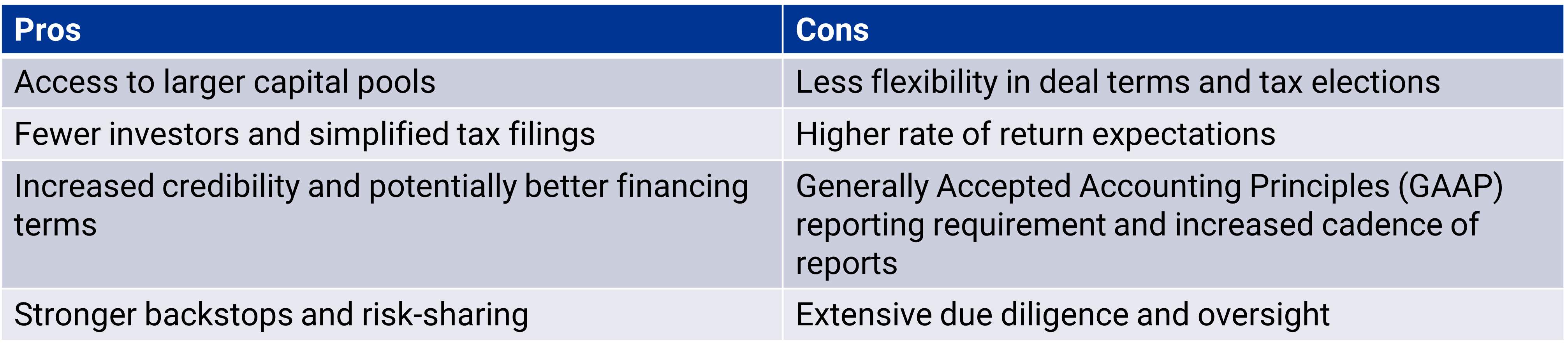
Partnering with institutional investors opens the door to larger opportunities, but it also brings new expectations and requirements. Here’s a snapshot of what you stand to gain and what you’ll need to be ready for when sourcing institutional capital.
Before you engage with institutional capital, consider whether your firm is positioned to meet expectations:
Institutional investors also may require:
In many cases, your operating agreement must reflect entity-level investors who require less aggressive tax treatments and expect a clear, compliant return path.
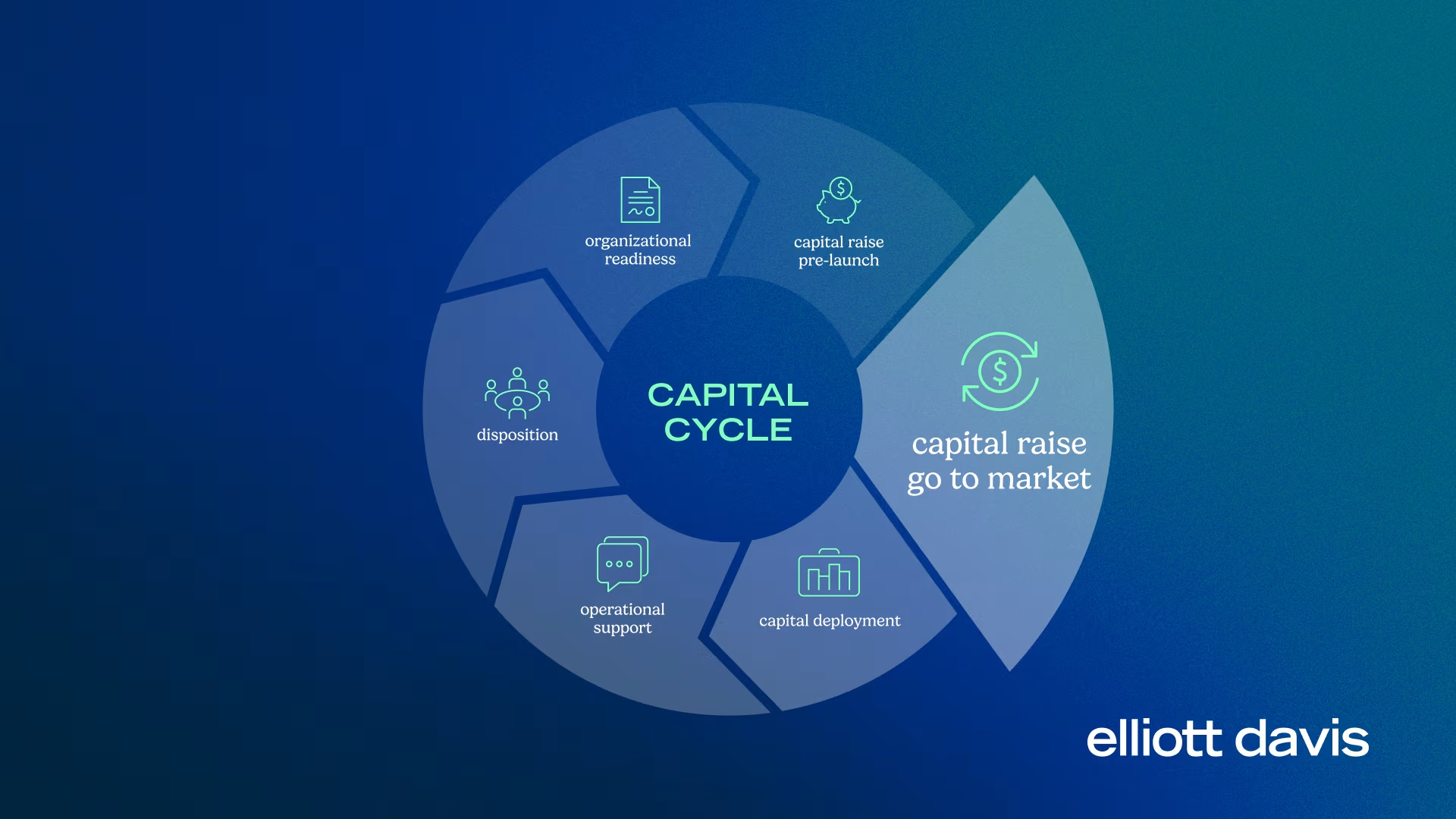
At Elliott Davis, we work with real estate firms transitioning into institutional capital partnerships. Our team can support you at every stage of the real estate capital lifecycle.
We assist with:
Contact us today to get started.
The information provided in this communication is of a general nature and should not be considered professional advice. You should not act upon the information provided without obtaining specific professional advice. The information above is subject to change.
related
insights










.jpg)

%20(1).jpg)


