Every industry has its own nuances. We take that into consideration and approach business solutions with the specific lens required of your field. Our teams are comprised of talent with relevant experience and we’re prepared to meet every challenge.
Every industry has its own nuances. We take that into consideration and approach business solutions with the specific lens required of your field. Our teams are comprised of talent with relevant experience and we’re prepared to meet every challenge.
Edit: Originally published on August 17, 2023. Updated to reflect current internal controls best practices.
“Our people are our greatest strength” may be a familiar phrase, but the reality behind it is more complex. Every organization relies on its workforce, and for many businesses, labor represents the single largest investment. As companies grow, leaders face the challenge of determining if, when, and where additional talent is needed.
We often hear this concern from leadership teams: “We know we need more capacity to grow, but we’re not sure whether that means hiring, restructuring, or investing in new technology.”
Early in the discovery phase with new customers, we often find the issue isn’t a shortage of people, but a lack of alignment. With AI and automation reconfiguring how work gets done, organizations have more options than ever. In many cases, the opportunity lies in reorganizing existing teams, clarifying responsibilities, and better leveraging the talent already in place. With targeted adjustments, organizations can unlock capacity, reduce unnecessary hiring, and improve performance, without adding cost.
How Does Role Alignment Improve Performance and Reduce Risk?
Companies that treat human capital as a driver of value rather than a fixed expense tend to perform better over time. That commitment shows up in how teams are structured, how decisions are made, and how risk is managed day to day.
When responsibilities are clearly defined and matched to individual strengths:
Work moves faster with fewer handoffs
Accountability becomes easier to maintain and more well-defined
Financial and operational risks are identified earlier
Leadership has more reliable information for decision-making
How Effective Organizations Assess Team Alignment
Effective organizations use a combination of operational, control, and risk-based assessments to ask the right questions, focusing on alignment, capacity, and accountability rather than headcount alone. When layered into optimization efforts, these assessments help organizations understand not just whether controls exist, but whether the right people are positioned to execute them effectively.
Key questions include:
Are the right skills and expertise aligned to the right work? Look beyond titles to assess whether individuals have the experience and judgment required for their roles, particularly where responsibilities affect financial reporting, compliance, or operational risk. With emerging technology rapidly changing the skills required to be successful in a role, misaligned expertise is a common and often hidden source of control failure.
Is work distributed evenly and realistically? Evaluate how work is distributed to identify gaps, overlaps, or imbalances that may be limiting effectiveness or creating unnecessary strain.
Is management oversight and support sufficient? Assess whether leaders provide clear direction, timely review, and appropriate escalation paths. Effective oversight reinforces accountability, supports consistent execution, and reduces reliance on informal workarounds.
Do employees have a voice in improvement efforts? Frontline employees often have the clearest view of what is working and what is not. Create space for ideas, feedback, and collaboration.
Do people understand how their work connects to the business? Take the time to understand individual goals, preferences, and motivations, and connect their work to broader business objectives.
Are teams supported by clear structure? Evaluate whether processes, controls, tools, and decision rights are clearly defined, appropriately documented, and consistently applied to enable accountability and reliable execution.
Frequently Asked Questions
How do people impact internal controls? Internal controls rely on people to design, operate, and monitor them. When roles are unclear or misaligned, controls are more likely to break down. Clear ownership, appropriate skills, and manageable workloads lead to more consistent execution and fewer errors.
Does improving performance always require hiring more people? No. Many organizations find that performance improves by reorganizing responsibilities, eliminating duplication, and better matching skills to tasks. In many cases, capacity already exists but is not being used effectively.
What is role alignment and why does it matter? Role alignment means assigning responsibilities based on skills, experience, and risk exposure. When roles are well aligned, decisions are made faster, accountability is clearer, and reliance on a small number of individuals is reduced.
How does team structure affect audit readiness? Audit readiness improves when control ownership is clear, documentation is consistent, and responsibilities are understood across the organization. Teams that know how their work supports financial reporting are better prepared to respond to auditor requests and address findings.
What are common signs of team misalignment? Common indicators include frequent rework, missed deadlines, unclear ownership, overreliance on a few individuals, and recurring control issues. These signals often point to structural problems rather than performance issues.
We Can Help
An effective team supports sound decision-making, risk management, and audit readiness. When roles are clearly defined and aligned to individual skills, organizations gain more reliable information, stronger accountability, and fewer control breakdowns. Teams that understand how their work connects to financial reporting and controls can identify issues sooner and respond decisively.
At Elliott Davis, our team helps organizations assess their people through a risk-focused lens, enabling leaders to strengthen performance. Our team helps customers:
Evaluate role alignment and ownership across key processes and control activities
Identify skills gaps and concentration risk that could create control weaknesses
Assess workload distribution and capacity to uncover inefficiencies, bottlenecks, or heightened risk
Clarify expectations for control owners to improve consistency, documentation, and execution
Strengthen readiness for audits and growth by aligning people, responsibilities, and reporting to current risk and control requirements
Contact us today to get started and explore the full series:
The information provided in this communication is of a general nature and should not be considered professional advice. You should not act upon the information provided without obtaining specific professional advice. The information above is subject to change.
contact our team
No items found.
contact our team
contact our team.
related
insights
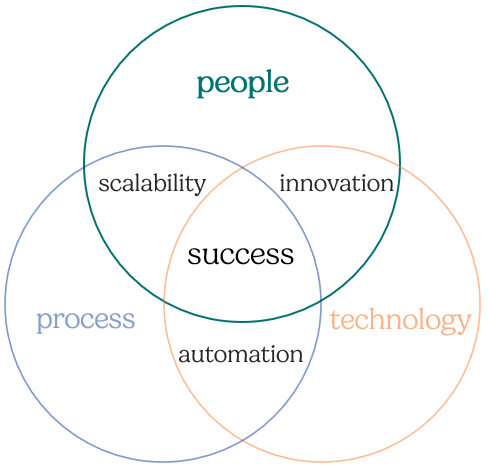
Improve Organizational Performance through People, Process and Technology
Learn how aligning people, processes, and technology can improve organizational performance—often by making better use of systems you already have in place.
Article
August 8, 2023
Improve Organizational Performance: Focus on Technology – The automation enabler
Learn how technology can speed up your processes and allow for a faster pace work environment. Consider which variables to prioritize when selecting technology.
Article
September 6, 2023
Improve Organizational Performance: Focus on Processes – Clear outline of the beginning, the middle, and the end
Discover how businesses can strengthen performance by aligning processes with people and technology. Good processes lend structure and support to be able to manage challenges and make informed decisions.