find your solution.
search for solutions by category, industries, insights, and people.


find your solution.
search for solutions by category, industries, insights, and people.
search for solutions by category, industries, insights, and people.
search for solutions by category, industries, insights, and people.
What the One Big Beautiful Bill Act means for financial institutions
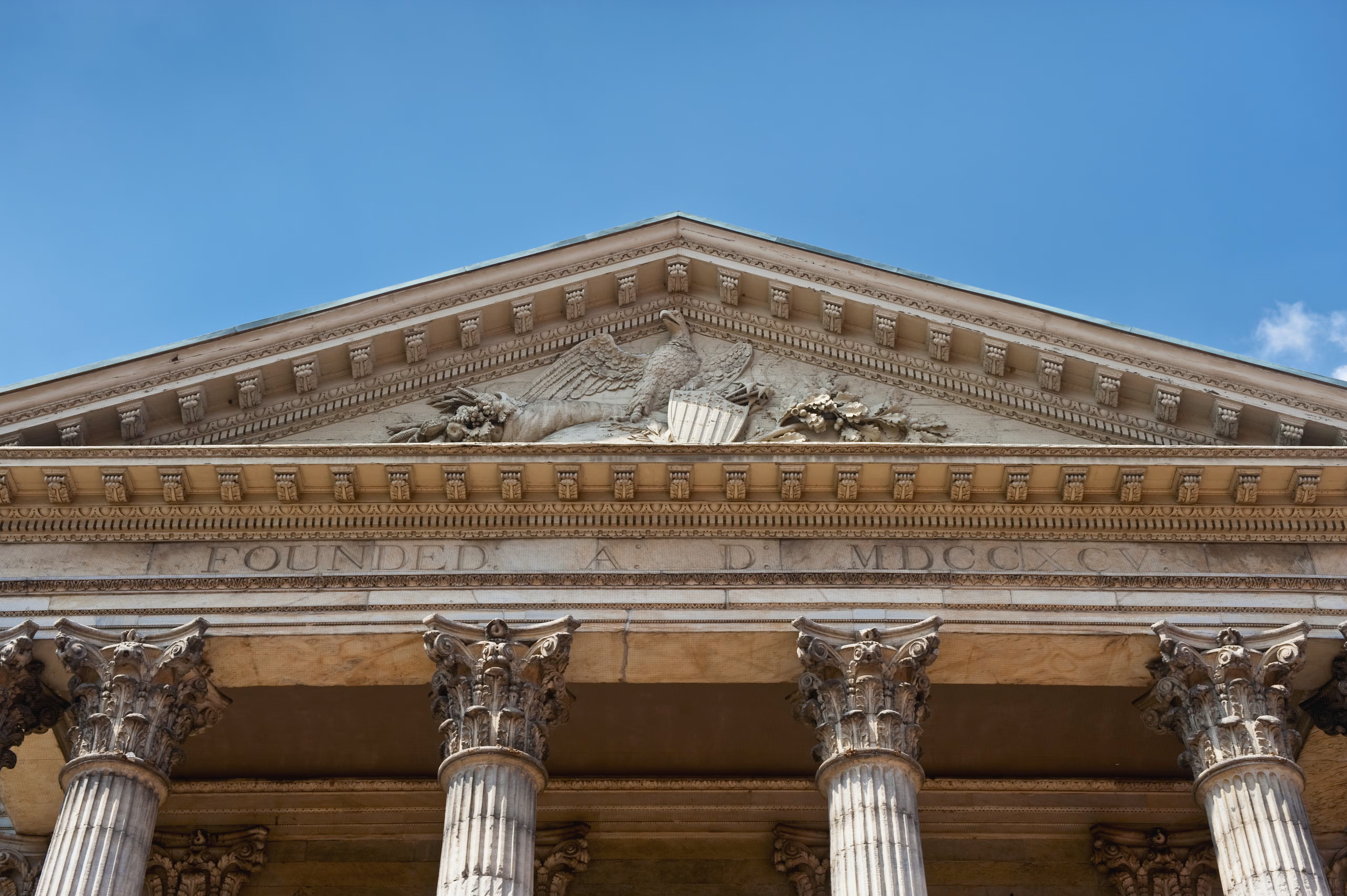

For banks and other financial services providers, the One Big Beautiful Bill Act (OBBBA) doesn’t include many provisions that squarely apply to this industry. However, its ripple effects are significant. Signed into law on July 4, 2025, the OBBBA introduces provisions that affect everything from loan structures to compliance frameworks. While most measures target businesses and consumers directly, they create indirect challenges and opportunities for product design, reporting, and strategic planning across financial institutions.
Below, we’ve outlined the provisions most likely to impact your organization and what they mean for your operations.
The OBBBA makes bonus depreciation and R&D expensing permanent, a major win for small businesses. While these provisions primarily benefit operating companies, they indirectly influence financial institutions by driving demand for financing and altering credit risk profiles. Expect increased loan activity tied to capital investments and innovation initiatives.
Lenders can now exclude 25% of interest income on qualifying rural or agricultural real property loans, subject to proportional expense disallowance. This incentive encourages rural development but adds complexity to tax reporting. Institutions should review loan portfolios to identify eligible transactions and adjust compliance processes accordingly.
The introduction of Trump accounts for newborns creates new compliance and product design challenges. Banks will need to develop systems for account eligibility, contribution tracking, and reporting under federal guidelines. These programs may also require enhanced customer education and marketing strategies.
The OBBBA changes the calculation for the §163(j) limitation from EBIT to EBITDA, improving deductibility for many businesses. For financial institutions, this affects credit structuring and underwriting standards, particularly for leveraged borrowers. Institutions should revisit loan covenants and stress-testing models to reflect the new rules.
Consumers can now deduct up to $10,000 of interest on eligible auto loans. To qualify, the vehicle must be new, for personal use, and a passenger vehicle under 14,000 lbs. with U.S. final assembly. While this provision benefits borrowers, it adds reporting burdens for lenders. Financial institutions must maintain accurate documentation and compliance with IRS requirements to avoid penalties.
Permanent increases to estate and gift tax exemptions will influence wealth management strategies for high-net-worth clients. Banks and trust companies should anticipate greater demand for estate planning services and review fiduciary offerings to align with client needs.
In a surprise provision, the OBBBA allows 100% expensing for manufacturing property placed in service, likely driving demand for financing in the industrial sector. Institutions should prepare for increased loan applications tied to capital expenditures and consider specialized lending products to capture this opportunity.
At Elliott Davis, we help financial institutions turn these challenges into opportunities. Our Federal Tax team can help you:
Our goal is simple: keep you compliant, mitigate risk, and support leadership with actionable insights that align with your business objectives.
Ready to move forward? Contact our team today to explore federal tax solutions that drive success.
For more information on the One Big Beautiful Bill Act, visit our dedicated landing page for additional insights.
The information provided in this communication is of a general nature and should not be considered professional advice. You should not act upon the information provided without obtaining specific professional advice. The information above is subject to change.
.jpg)

.jpg)

