


Table of Contents
Share with network
Related Insights
Since the Federal Financial Institutions Examination Council (FFIEC) retired its Cybersecurity Assessment Tool (CAT) on August 31, 2025, financial institutions now face a critical decision: Which framework should we adopt?
For years, CAT served as the industry’s compass, guiding banks and credit unions through the maze of cyber risk. As threats are changing and attackers are moving faster, regulations are tightening, and clients are demanding resilience. In this new reality, the frameworks you choose become survival strategies. With CAT gone, is your cybersecurity strategy ready for the next wave of threats?
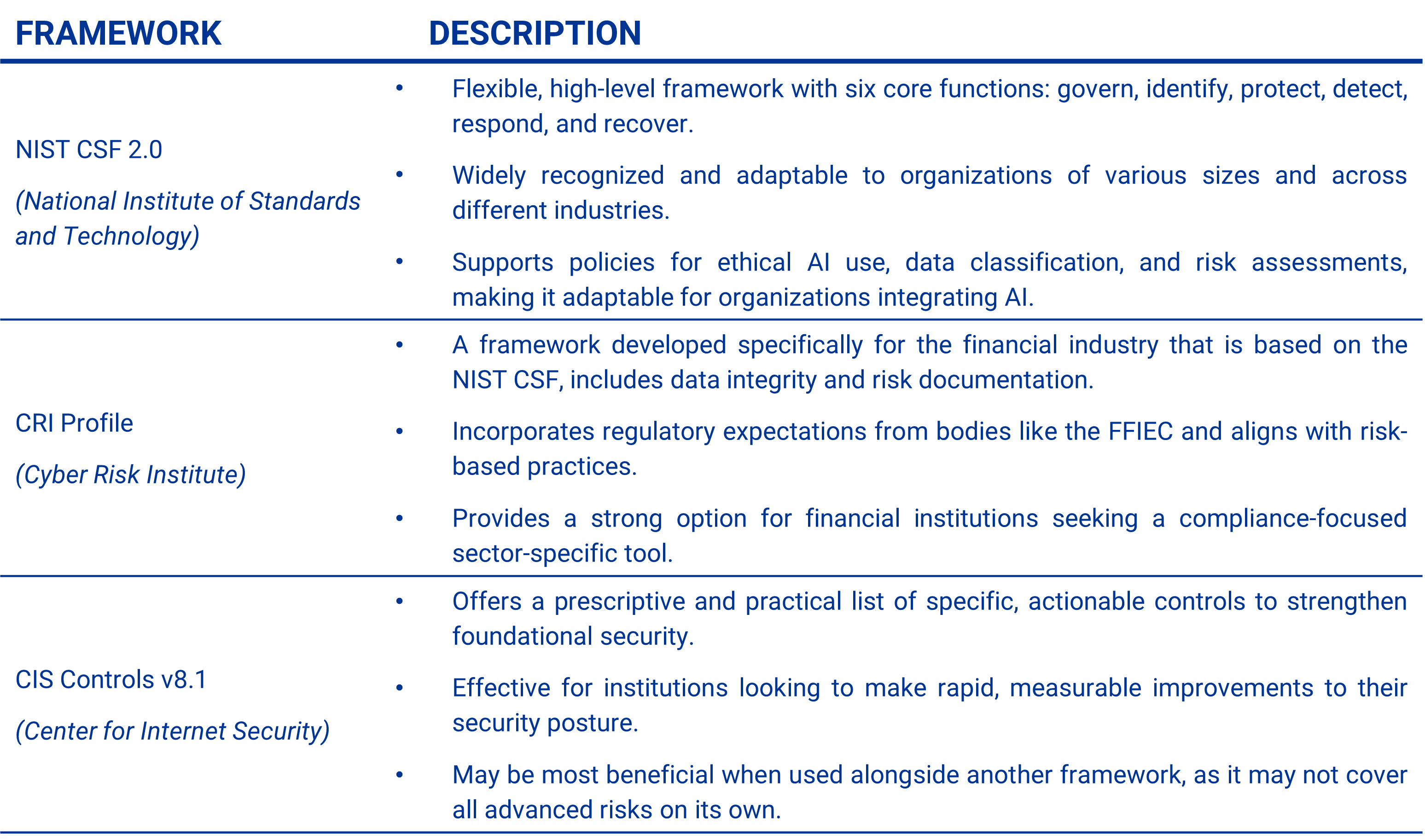
Annual FFIEC assessments remain a cornerstone, but the industry is shifting toward more adaptable, risk-based frameworks. NIST CSF 2.0, CRI Profile, and CIS Controls v8.1 all offer distinct advantages and a different path forward. So, which one is right for your organization?
Reference the table below for an overview of the top three cybersecurity frameworks:
In response to rising cyber threats, regulators and businesses are taking action to strengthen cybersecurity practices across industries. To strengthen your cyber resilience, start here:
Cyber resilience has expanded beyond traditional threats to include emerging risks such as algorithmic bias, automated fraud, and weaponized data. To address these challenges, policies must now cover:
Frameworks like NIST CSF 2.0, CRI Profile, and CIS Controls v8.1 are strategic tools for building resilience and driving innovation. The right choice depends on your organization’s size, regulatory environment, and risk appetite.
At Elliott Davis, we help organizations:
Ready to take the next step? Contact us today to get started.
The information provided in this communication is of a general nature and should not be considered professional advice. You should not act upon the information provided without obtaining specific professional advice. The information above is subject to change.
related
insights